 |
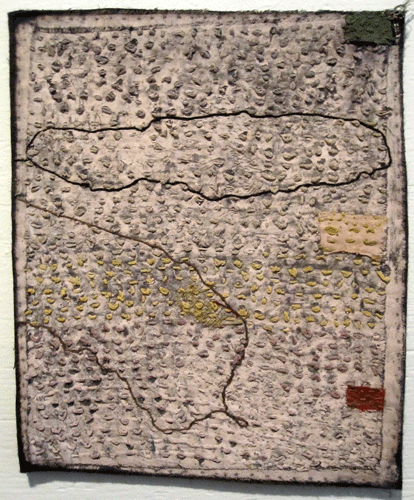
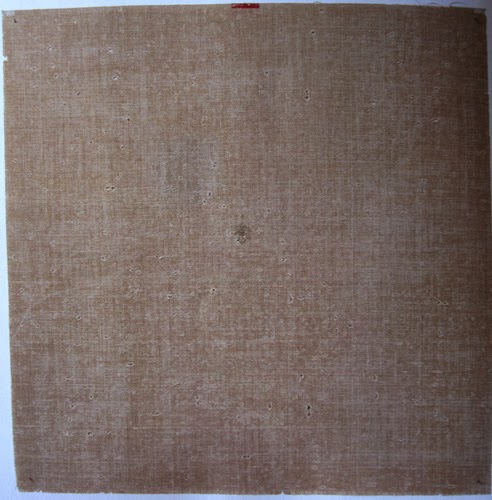
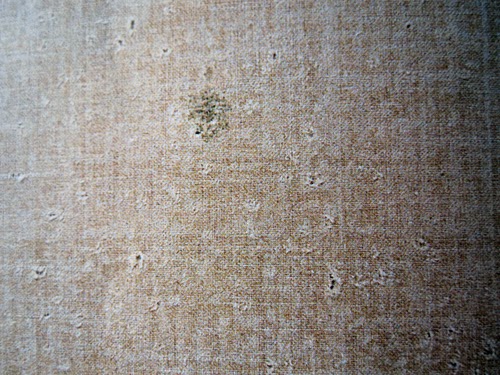
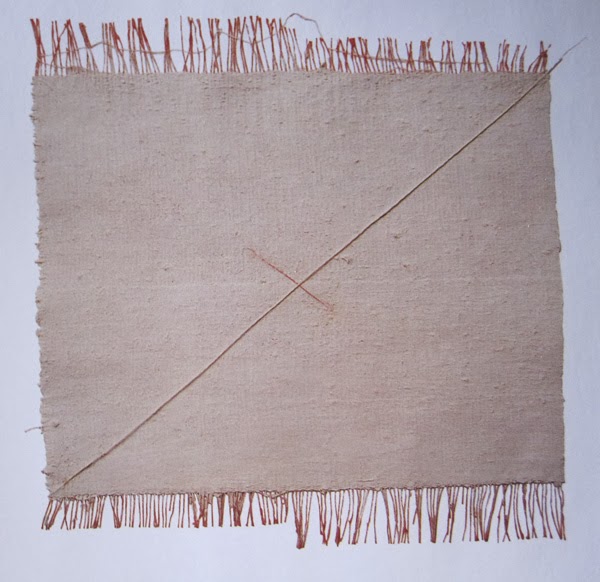
Flying Over Salt Lakes,
stitching on cotton with earth ochre, approximately 13" x 16", 2013 |
Dorothy Caldwell has become an icon for textile artists, exhibiting and teaching around the world. We Canadians claim her as our own, as she has lived in Ontario since the mid seventies, relocating here from the USA. The images in this post are of Dorothy Caldwell's latest exhibition, Silent Ice, Deep Patience, installed in the
Art Gallery of Peterborough March 21 until June 22, 2014.
 |
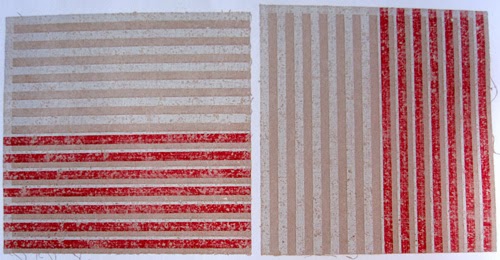
Left: Map Without Words
9 feet, 4 inches, x 8 feet, 5 inches, Right: Silent Ice/Deep Patience, 23" x 23". both 2013 |
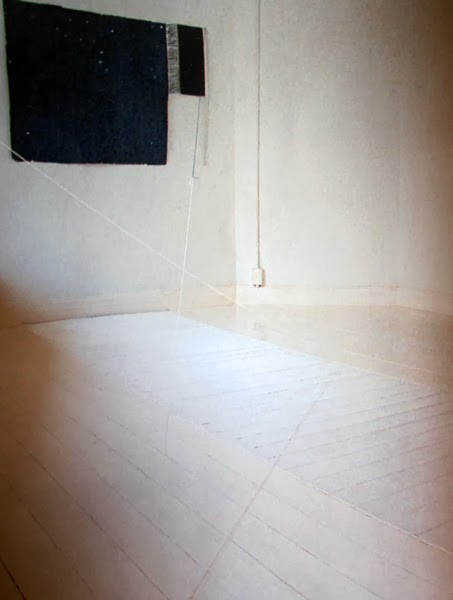
Upon entering, the viewer descends a long ramp towards the main exhibition space, welcomed by five small paintings made with hand stitch and earth ochres (see top photo) on the ramp's wall. Then, through an opening in that wall, the two pieces shown above beckon. Large scale, empty space, intimate marks. We are in Caldwell country.
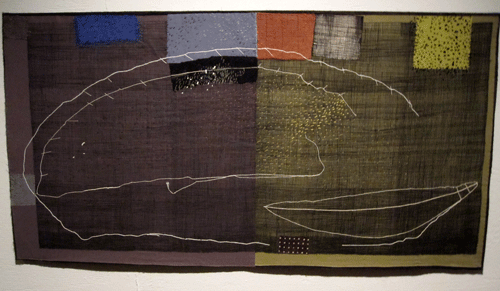 |
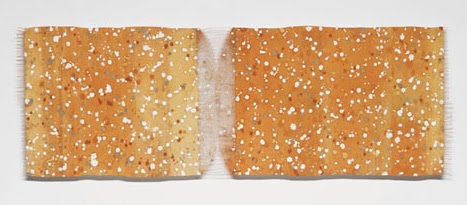
Wandering Time,
approximately 24" x 18", wax and silkscreen resist on cotton with stitching, 2011 |
In many of her pieces, Caldwell lines up coloured patches along edges. She draws our eye up to the sky, then over to the west and the east, and then brings it back to the centre. Line drawings are couched onto the surfaces, like trails. Archetypal vessel shapes resonate.
 |
| wandering time, 2011, detail |
Dorothy Caldwell's stitches recall the random repetition of the small marks we are familiar with in nature. Leaves fluttering in the wind, ripples in the water. Some large, some small, some linear, some a splotch, some widely spaced, others packed together. Footprints on a beach.
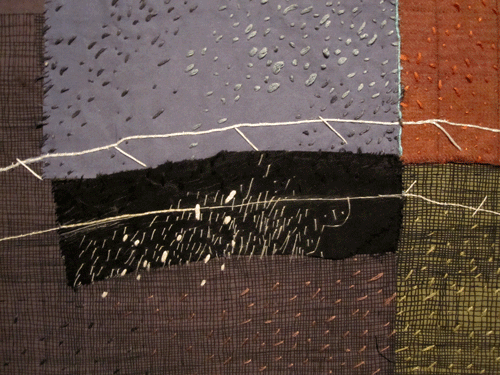 |
wandering time, 2011, detail
|
"My work is an ongoing investigation of the meaning of place. I investigate how humans mark and shape the land and how those human marks interact with the natural geology." Dorothy Caldwell
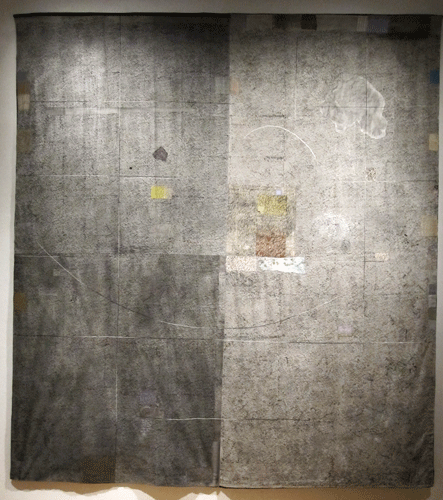 |
Map Without Words,
wax and silk screen resist on cotton, stitching, applique, 9'4" x 8'5", 2013 |
We often meet in the centre in Dorothy Caldwell's world. Four corners, four patch, grids, crosses, grid the large unknown to make sense of it. There is order within chaos here. Human geography.
This body of work is the result of the artist's travels to the Australian Outback and the Canadian Arctic. Interested for decades in how humans mark the land, (previous exhibitions Field Notes (1998) and Ground Cover (2000) this current exploration of wilderness landscapes is a continuation for the artist.
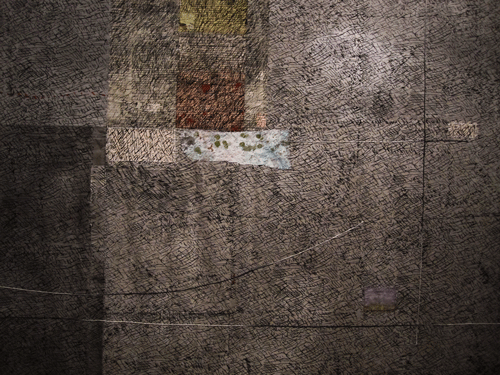 |
| Map without Words, detail |
Dorothy Caldwell uses cloth as a vehicle to translate her observations because cloth is like the land. Cloth reacts as land does to human intervention. Simple actions like wearing, mending, stitching and patching make marks on cloth just as farming, road building, and daily walks mark the earth.
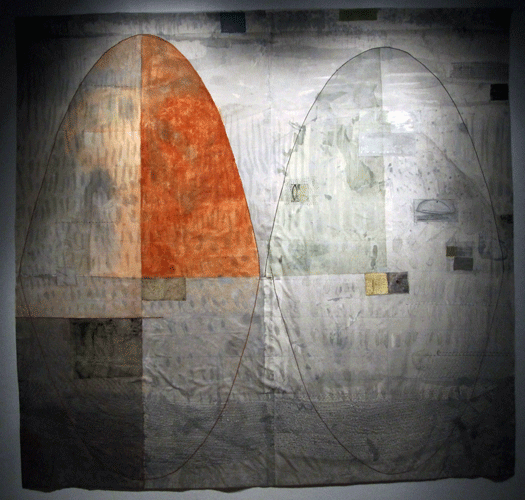 |
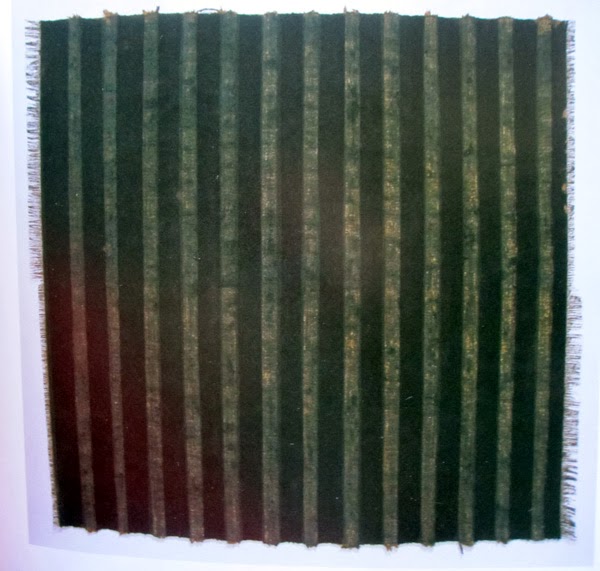
A Red Hill, A Green Hill,
ink wash, earth ochre on cotton with stitching and applique, 9'4" x 9'8" 2012 |
In the large scale tactile painting shown above, Caldwell applied ink wash and earth pigments to the cloth as a change from her usual resisted dye or discharge methods. Thoughtfulness is evident. The aesthetics of time and touch, evident.
 |
| A Red Hill, A Green Hill, detail |
Small patches and marks that drift into atmospheric hazes when seen at a distance, are unique and very real human habitations upon close inspection. The big thread used in the waves of rugged stitching along the lower quarter of this wall piece was rubbed with earth and connects with the viewer on many levels.
 |
| A Red Hill, A Green Hill , detail |
"I am intrigued by maps and by the organization of land through patterns of settlement and agriculture. I have come to see the dichotomy between conventional mapping that identifies intimate landmarks and simplifies them into abstract shapes and textures." Dorothy Caldwell
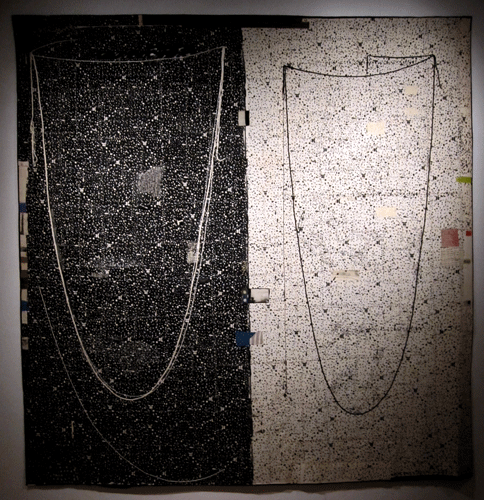 |
How Do We Know When It Is Night?
wax and silkscreen resist on cotton, stitch and applique, 10 feet by 9 feet 6 inches, 2010 |
Little patches along each edge and down the centre,
bowls drawn as if with a giant pencil,
duality, in and out
 |
| How Do We Know It' Night? detail |
"Caldwell tells students that what an artist needs to learn more than anything is how to make time for their art"
Ann Jaeger
 |
| How Do We Know It's Night? Detail |
Caldwell's large pieces have balance, stillness
They cause us to think beyond the gallery
about the vastness of nature and how nature has its own system.
The larger seasonal cycles, the many small parts within vastness.
That human marks are revealed by time and accumulation,
then erased by wind, eroded by water, hazed over by weather.
Stain of earth, footprint of man, animal tracks through the forest,
like poetry, these things occur one by one and resonate with personal experiences that don't always have anything to do with land, more with relationships.
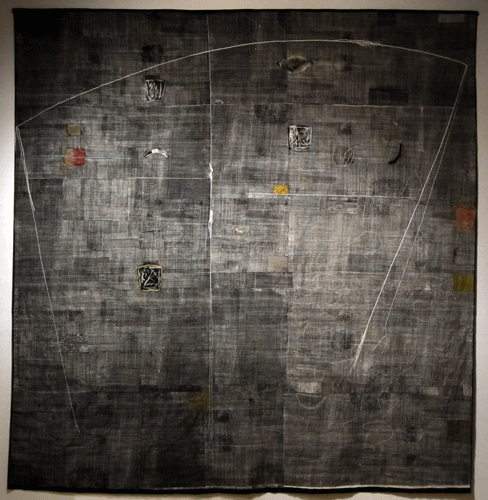 |
Signs,
wax and silkscreen resist on cotton,stitching, applique, 8'9" x 8'0", 2014 |
The artist's most recent large work returns to her preferred methods of marking large pieces of cloth with resist techniques. The subtle grid of the ground, a new linear shape, and the painted squares and crescents dotting the interior are atmospheric.
"Maps give a viewpoint of the land filtered through what is important to the mapmaker. I am mapping unfamiliar territory, identifying my personal landmarks through gathering, touching and recording the contents of the landscape. In this way I form a sense of place for myself." Dorothy Caldwell
 |
| Signs, detail |
This post is about the large scale work but there are also many small pieces exhibited as well as an entire room devoted to the artist's collections of shells, lichens, bones, rusty wires, journal pages, iron nails, and her many books of marks and collected earth pigments. How the artist works with the land to make these 'maps' deserves its own write up. The video of Dorothy Caldwell (click
here) perhaps fills the gap.
Other internet sources for this artist:
Ann Jaeger's informative review of Caldwell;s life and work on
trout and plaid online journal,
Barbara Lee Smith's curated exhibition catalog
Traces ,
as well as Caldwell's
own website and
the CCCA artist profile .
Caldwell's exhibition was shown at the Idea Exchange in winter 2015 and went on to St Mary's University gallery in Halifax for March and April of the same year. This review by akimbo halifax correspondent
Daniel Higham was published april 7 2015. Good to see some writing about this artist. Joe Lewis also wrote a review in Fibre quarterly....have to find that for you and shall insert it here when I do. xx
The Dorothy Caldwell quotes in this post are from her statement found in Barbara Lee Smith's essay in the Traces catalog. All photos are from the exhibition and are by Judy Martin with permission from Dorothy Caldwell.





 Posts
Posts